
For years, urban growth and environmental conservation seemed to follow two different paths. Today, cities face a different challenge: growing, attracting investment, and creating opportunities without compromising the resources their future depends on.
At Cap Cana Destination City, this vision has been part of its development model since its conception in 2002. Sustainability is reflected in systems, infrastructure, and concrete actions. Energy generation, water reuse, and the protection of species and ecosystems are some examples.
Growing with a clear vision
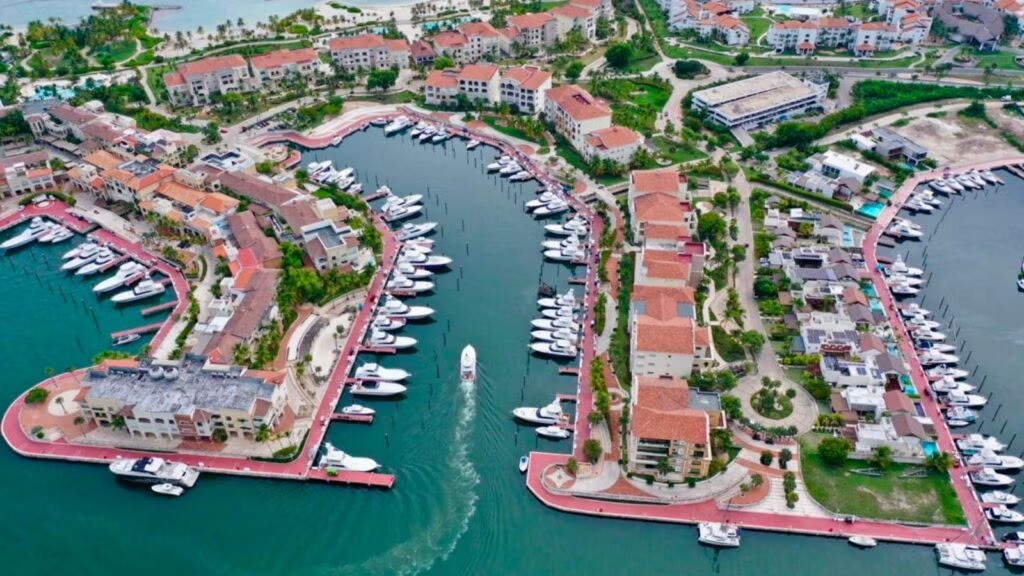
Cap Cana has evolved from a tourism and real estate project into an active community. Today, tourism, residential life, commerce, education, sports, and services all come together within the destination.
In addition, thousands of families now live here permanently. This creates economic activity throughout the year and reduces dependence on tourism seasonality.
Part of this evolution began long before the hotels, residences, and businesses we know today.
Cap Cana was conceived around a master plan that defined how the destination would grow. At the same time, it considered the systems needed to support that growth, including energy, water, telecommunications, mobility, and environmental infrastructure.
And that is where an important part of this story lies: in everything that keeps a city running but often goes unseen.
What we don’t always see
Behind every hotel, residence, and public space is infrastructure designed to manage resources more efficiently and reduce vulnerabilities.
When it comes to energy, Corporación Energética Turística Juanillo (CENETUR) generates and distributes electricity throughout the destination. It also incorporates different renewable energy solutions.
Its photovoltaic park and solar panel systems cover more than 11% of Cap Cana’s energy demand. As a result, they help diversify the energy mix and reduce the destination’s carbon footprint.
Water follows a similar approach.
Through Corporación de Acueductos Turísticos Juanillo (ACUATUR), Cap Cana manages the entire water cycle. The system collects and processes all wastewater generated within the destination.
Then, 100% of the treated water is reused to irrigate golf courses and green areas.
In this way, water that passes through the treatment plants returns to the destination’s operations instead of simply becoming waste. It is a clear example of a circular economy model applied on a large scale.
Connected and prepared
A city’s sustainability does not depend only on how it uses its resources. Its ability to continue operating during challenging conditions also matters.
Cap Cana has more than 150 kilometers of fiber-optic infrastructure. This network meets the needs of an increasingly international community. It also supports remote work and digital operations, which have become important factors in the competitiveness of modern cities.
These and other services operate through underground infrastructure. This reduces exposure to severe weather, lowers the risk of service disruptions, and improves the ability to respond to unexpected events.
The environment is part of development
Planning serves another important purpose: protecting the long-term value of the destination and the investments made within it.
For this reason, Cap Cana’s expansion follows urban planning regulations, construction standards, and internal guidelines. The goal is to maintain consistency as the destination grows while preserving the quality of its surroundings.
However, infrastructure is only one part of the equation.
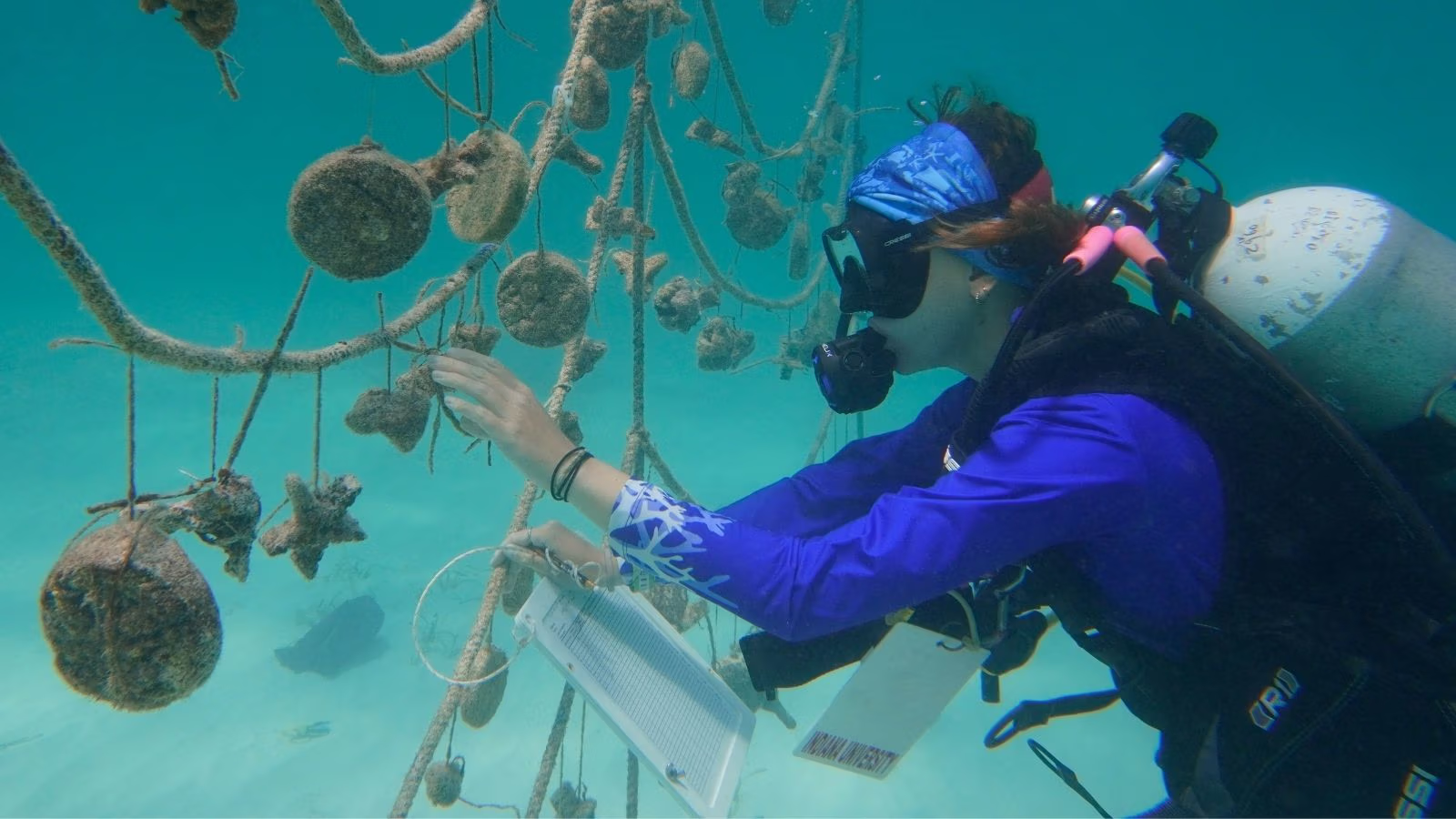
Through Cap Cana Foundation, several initiatives focus directly on ecosystem conservation. These include bee rescue programs, the reproduction of native and endemic species, coral restoration, reforestation efforts, and environmental education programs.
Sport fishing is also part of this approach. The destination maintains a strict catch-and-release policy for billfish species. This allows an activity that attracts international sports tourism to coexist with the conservation of marine resources.
In addition, systematic monitoring of manatee sightings provides valuable information for research. The data also helps support measures aimed at protecting the species.
Protecting also means understanding
Conservation efforts include the management and monitoring of wildlife species and habitats. Special attention is given to species threatened with extinction.
These include the rhinoceros iguana, Hispaniolan solenodon, Hispaniolan hutia, Boca de Yuma frog, and Ridgway’s hawk.
The work goes beyond studying and protecting these species. It also aims to make coexistence between wildlife and a growing community possible.
For example, signs have been installed to alert people to the presence of wildlife. Some are placed along roads to encourage drivers to be especially careful in areas where animals may be present.
Individually, these actions may seem small. Together, however, they reveal a much broader approach to development—one that does not lose sight of the natural environment surrounding it.
A long-term vision
The challenge for any destination that continues to grow is making sure that growth does not come at the expense of what makes it valuable.
In Cap Cana, the goal is to bring economic development and environmental responsibility together. That means reusing water, incorporating renewable energy, building resilient infrastructure, protecting species, and carefully planning future expansion.
These are not separate efforts from development. They are part of it.
Thinking about the future of a city also means considering the resources it will need, the environment that surrounds it, and the quality of life it can offer to those who visit, invest, or have chosen to call it home.