
Cap Cana is featured in a recent coverage by Travel + Leisure, one of the most influential travel publications globally. The article highlights a new way of looking at tourism. It presents the destination as a place where the experience evolves toward a more conscious and integrated relationship with its surroundings.
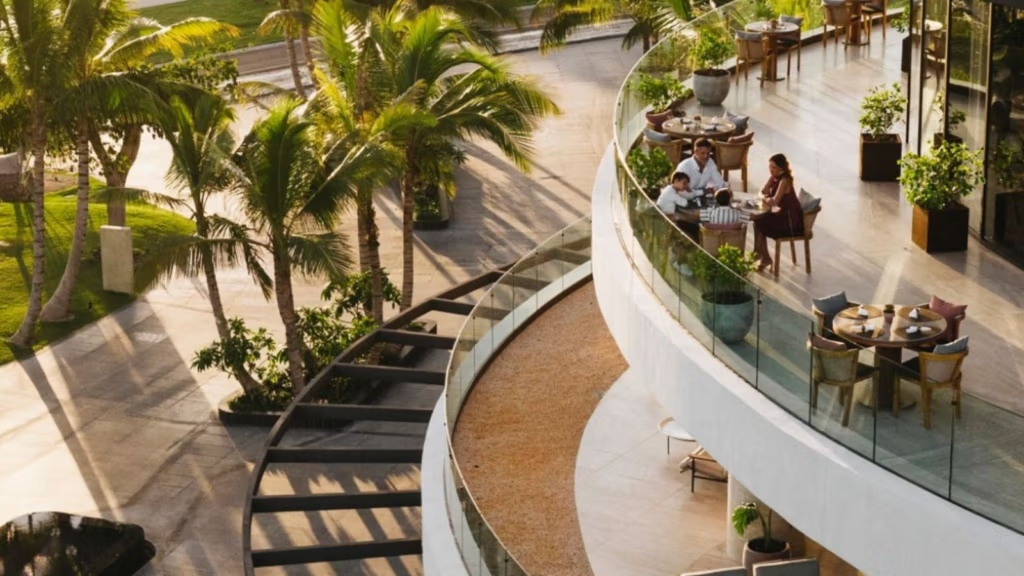
One of the key highlights is the St. Regis Cap Cana Resort. The St. Regis Cap Cana Resort is one of the newest additions to Cap Cana’s resort portfolio. It is also among the most recent luxury openings in eastern Dominican Republic.
Located beachfront, the resort offers 200 rooms. It combines natural materials, open architecture, and a diverse culinary offering. It also provides access to nearby experiences such as Punta Espada.
Beyond its design and amenities, the approach is reflected in daily operations.
For example, the resort uses water reuse systems for irrigation. It also incorporates green roofs to improve energy efficiency. In addition, its management model is designed to integrate with the surrounding environment.
Beyond the resort
The article also explores experiences outside the resort, including Scape Park.
Scape Park spans more than 150 acres. It combines adventure and nature in one setting. Activities include caves, trails, cliffs, and outdoor circuits. At the same time, the park offers spaces for rest and observation.
One of its most iconic spots is the Blue Hole. Visitors reach it through natural trails and hanging bridges. This journey is part of the experience.
Once there, the contrast becomes clear. The energy of the park fades, and the water creates a sense of calm. Even in a destination known for luxury, nature continues to set the pace.
What isn’t always seen
Another layer of the article focuses on sustainability as a system. This is not presented as a message, but as a practice.
For instance, coral restoration initiatives take place along nearby beaches. In addition, projects such as Mercy Workshop support women in vulnerable situations.
These efforts allow visitors to connect with the destination in a deeper way.
Even in gastronomy, local influence plays a role. Dominican flavors appear within a global context. This reinforces a clear idea: luxury can also reflect identity.
An evolving narrative
The article reflects a shift in how Cap Cana is perceived. It is no longer seen only as a luxury destination. Instead, it is understood as a place where development, experience, and environment align.
This evolution shows a broader trend in travel. Today, luxury and sustainability are no longer separate concepts. They are part of the same experience.
Read the full article
This is only part of a larger story. Read the full article by Travel + Leisure here.