Despejado28°Despejado
[location-weather id="6356"]
Nature • Cap Cana

Bird Watching & Nature

Forests, lagoons, mangroves, caves and coastline — a living mosaic of ecosystems waiting to be discovered across the destination.

Cap Cana brings together diverse ecosystems that showcase its natural richness through forests, lagoons, mangroves, caves, cenotes and coastal areas — providing habitats for countless species of flora and fauna, and different ways to experience nature throughout the destination.

86+
Resident Bird Species
Plus migratory birds that arrive throughout the year
The Bird-Watching Route

Where wings meet water

Cap Cana is home to 86 recorded resident bird species, in addition to migratory birds that arrive at different times of the year. These are some of the best spots to observe them:

Laguna Las Garzas Hole 3 — Las Iguanas Golf Falda del Farallón Reserve Cap Cana Marina Playa Juanillo
Best Spots

Five places to watch the birds

From freshwater lagoons and golf-course wetlands to protected forest and the open coast — each habitat brings its own cast of species.

Laguna Las Garzas

At the entrance to the Farallón, its mangrove forest and freshwater-and-brackish lagoon shelter aquatic birds such as the Common Gallinule and Limpkin. At sunset, white herons and egrets gather in a single tree to roost — the natural phenomenon that gave the lagoon its name.

Common GallinuleLimpkinBroad-billed TodyGray KingbirdPalmchatRidgway’s Hawk

Did you know? The lagoon is also home to freshwater turtles, fish, snakes, frogs and dragonflies, among other species.

Hole 3 — Las Iguanas Golf Course

Its lagoon, at the intersection of Bulevar Central and Bulevar Hotelero, attracts numerous aquatic birds — particularly pelicans and herons — which can be seen at different times throughout the day.

PelicansHerons

Falda del Farallón Ecological Reserve

Protecting roughly 2.4 kilometers of forest, this is the area of greatest plant and animal biodiversity in Cap Cana. Its blend of xerophytic vegetation and humid forest over coral rock hosts remarkable endemic species.

Hispaniolan Lizard-CuckooTurkey VultureBlack-crowned Palm-Tanager
Preparing to open to the public

Cap Cana Marina & Juanillo Beach

Here bird watching shifts to the coast. Oystercatchers, Brown Pelicans, Ospreys, Magnificent Frigatebirds, terns, gulls, boobies, shorebirds and several herons can be spotted. Off Juanillo, the reef lagoon teems with fish that feed many of these birds.

American OystercatcherBrown PelicanOspreyMagnificent FrigatebirdTerns & GullsBoobies

Look closely. In the Marina’s waters, West Indian manatees — adults and calves — can occasionally be seen surfacing to breathe.


When to go

Time of day and season make all the difference. Plan around the light and the calendar to see the most.

Sunrise & Sunset

The periods of greatest bird activity — the golden windows for observation.

June – mid-August

Conditions are particularly favorable for observing resident species.

September – March

Migratory birds arrive, with the greatest numbers typically seen during the winter months.

Explore Your Way

On your own, or with a guide

Laguna Las Garzas, Hole 3 of Las Iguanas Golf Course, Juanillo Beach and the Cap Cana Marina can be explored independently. The Cap Cana Foundation also offers guided tours upon request.

Request a Guided Tour
Cenotes, Caves & Adventure

Nature & adventure at Scape Park

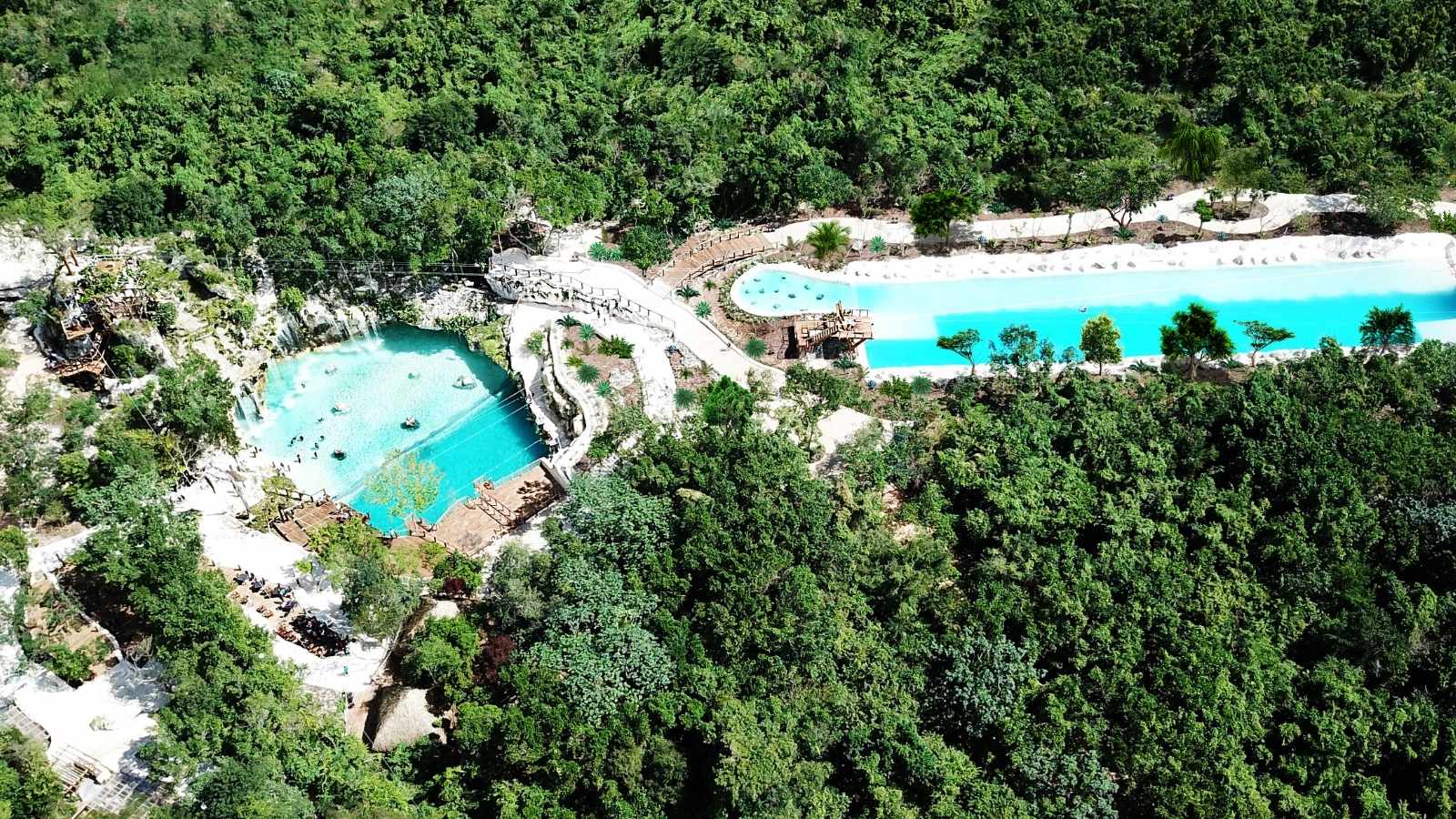
Another way to experience nature in Cap Cana is at Scape Park, where caves, cenotes, trails and rock formations come together in a variety of outdoor experiences.

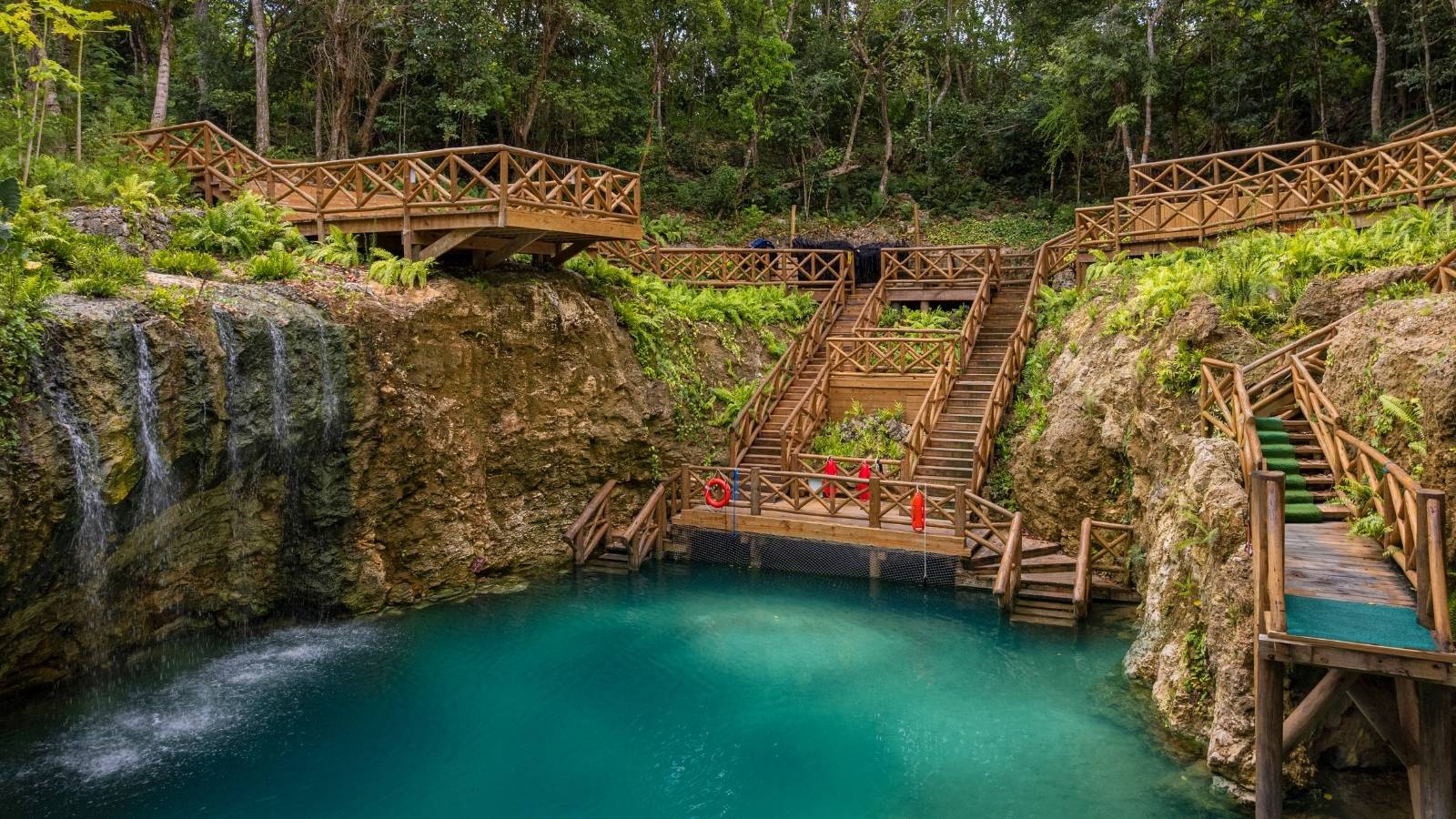
The Blue Hole Cenote Trail leads to a natural cenote of turquoise waters framed by tropical vegetation and rock formations, weaving trails and water within the same setting.

Blue Hole cenote with waterfalls and wooden stairs at Scape Park, Cap Cana

Blue Hole Cenote Trail

A natural cenote of turquoise water surrounded by tropical vegetation and rock formations.

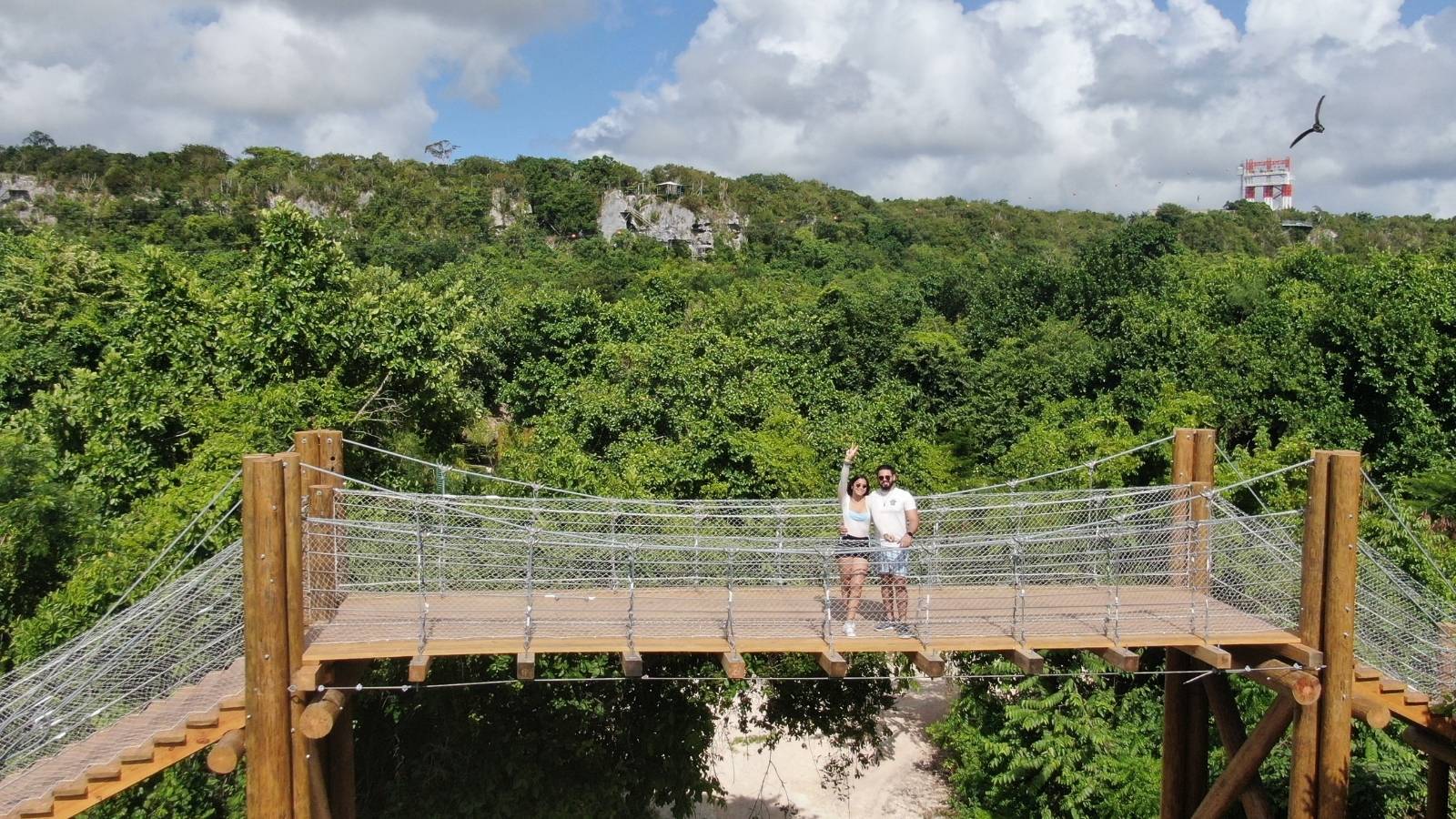
Angel FallsYouth JumpHanging Bridge

Iguabonita Cave Expedition

Explore an underground system of chambers and tunnels while observing geological formations shaped over thousands of years.

ChambersTunnelsRock Formations

Saltos Azules

Waterfalls and caves combined with aquatic experiences across a series of scenic sites.

Atabey FallsYaya’s Cave

Keep an eye out. The Rhinoceros Iguana, a species endemic to Hispaniola, can frequently be spotted in Punta Espada, Caletón, the Farallón and Scape Park.

Plan Your Visit

Come see Cap Cana in the wild

From the first birdsong at dawn to turquoise cenotes hidden in the forest — nature is one of Cap Cana’s most unforgettable experiences.

Ponte en Contacto

Política de Privacidad

Los Términos y Condiciones se actualizaron por última vez el 3 de septiembre de 2013. Cap Cana se reserva el derecho de modificar los Términos y Condiciones en cualquier momento y sin previo aviso. Es tu responsabilidad revisar los Términos y Condiciones de forma periódica.


Aviso de Derechos de Autor

La información, textos, gráficos, imágenes, sonidos, enlaces y todo el demás software e información publicados o contenidos de cualquier forma en este sitio (los «Contenidos») son propiedad de, o están licenciados a, Cap Cana S. A. y, salvo lo dispuesto expresamente en el presente documento, no podrán ser copiados, distribuidos, exhibidos, reproducidos ni transmitidos de ninguna forma ni por ningún medio, ya sea electrónico, mecánico, por fotocopia, grabación u otro, sin el permiso previo por escrito de Cap Cana S. A. Copyright © 2013. Todos los derechos reservados.

Aviso de Marca

Este sitio web contiene marcas registradas propiedad de CAP CANA S. A. (Cap Cana, Punta Espada, Marina Cap Cana, Cap Cana Real Estate, entre otras). Estas marcas y la propiedad relacionada están protegidas contra su reproducción.