Laguna Las Garzas
At the entrance to the Farallón, its mangrove forest and freshwater-and-brackish lagoon shelter aquatic birds such as the Common Gallinule and Limpkin. At sunset, white herons and egrets gather in a single tree to roost — the natural phenomenon that gave the lagoon its name.
Common GallinuleLimpkinBroad-billed TodyGray KingbirdPalmchatRidgway’s Hawk
Did you know? The lagoon is also home to freshwater turtles, fish, snakes, frogs and dragonflies, among other species.
Hole 3 — Las Iguanas Golf Course
Its lagoon, at the intersection of Bulevar Central and Bulevar Hotelero, attracts numerous aquatic birds — particularly pelicans and herons — which can be seen at different times throughout the day.
PelicansHerons
Falda del Farallón Ecological Reserve
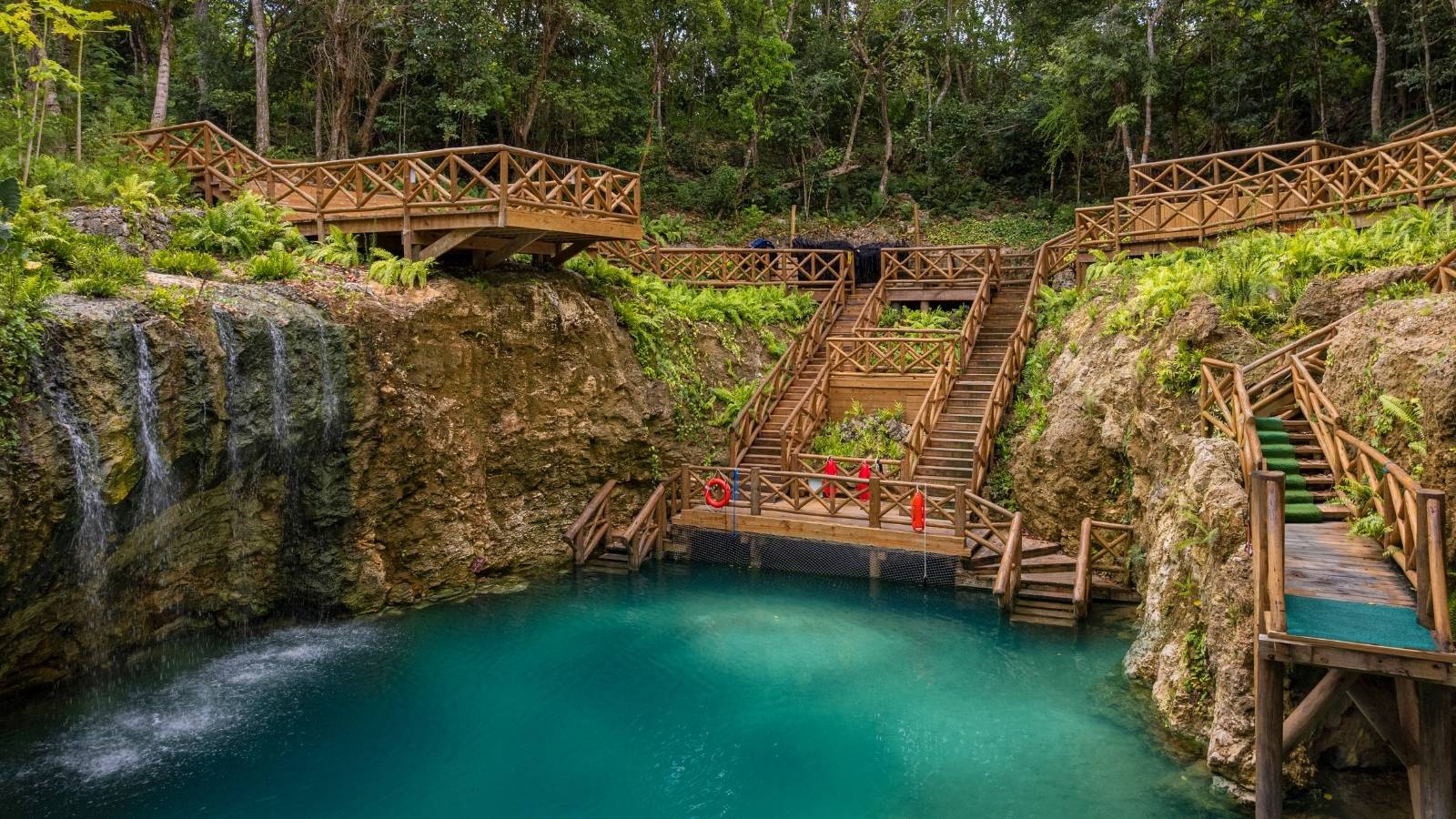
Protecting roughly 2.4 kilometers of forest, this is the area of greatest plant and animal biodiversity in Cap Cana. Its blend of xerophytic vegetation and humid forest over coral rock hosts remarkable endemic species.
Hispaniolan Lizard-CuckooTurkey VultureBlack-crowned Palm-Tanager
Preparing to open to the publicCap Cana Marina & Juanillo Beach
Here bird watching shifts to the coast. Oystercatchers, Brown Pelicans, Ospreys, Magnificent Frigatebirds, terns, gulls, boobies, shorebirds and several herons can be spotted. Off Juanillo, the reef lagoon teems with fish that feed many of these birds.
American OystercatcherBrown PelicanOspreyMagnificent FrigatebirdTerns & GullsBoobies
Look closely. In the Marina’s waters, West Indian manatees — adults and calves — can occasionally be seen surfacing to breathe.